Image Source: X
[Jolly Sports News] The Utah Jazz are struggling at the bottom of the Western Conference this season, sitting at 4-16 and ranked 14th. While their performance isn’t surprising given the team’s ongoing rebuild, it’s clear they need to make moves to align their roster with their long-term goals.
Although Lauri Markkanen might seem like an obvious trade candidate to accelerate their rebuild, his recent contract extension prevents him from being traded until the 2025 offseason.
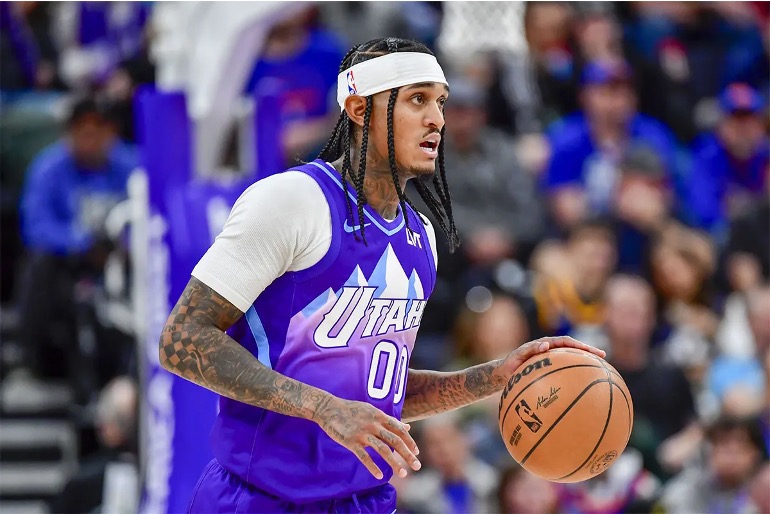
With Markkanen off the table, the Jazz’s next logical trade piece is Jordan Clarkson, a veteran presence whose skillset and contract make him an attractive option for contending teams.
Clarkson, the 2021 NBA Sixth Man of the Year, has been a valuable player for the Jazz both on and off the court. However, at 32 years old, he no longer fits the team’s rebuilding timeline.
While his scoring and leadership have endeared him to fans, trading Clarkson would allow the Jazz to prioritize their young core and acquire assets such as draft picks or younger players.
This season, Clarkson is averaging 15.0 points, 3.8 rebounds, and 3.8 assists per game in 26 minutes of action. His $14 million contract for the 2024-2025 season is team-friendly and should attract contenders looking to bolster their bench scoring.
Despite his contributions, his ball-dominant playstyle can limit opportunities for the Jazz’s younger guards, Keyonte George and Cody Williams, whose development is crucial for the team’s future.
In addition to his on-court abilities, Clarkson brings playoff experience, including an NBA Finals appearance in 2018. For a contender, his ability to score in bunches and his veteran presence could be a game-changer. However, injuries have started to impact Clarkson’s availability—he has missed significant time over the last two seasons and has already sat out seven games this year. Trading him now, before his value declines further, is a smart move for both the Jazz and Clarkson.
By moving Clarkson, the Jazz can fully commit to their rebuild and hand greater responsibilities to George and Williams, giving them a chance to grow into potential franchise cornerstones.
For Clarkson, a trade would provide an opportunity to spend his remaining prime years contributing to a playoff team rather than languishing on a rebuilding squad.
Ultimately, trading Clarkson would benefit both parties: the Jazz would accelerate their rebuild and free up opportunities for their young talent, while Clarkson could join a contender and make the most of his remaining years in the league.